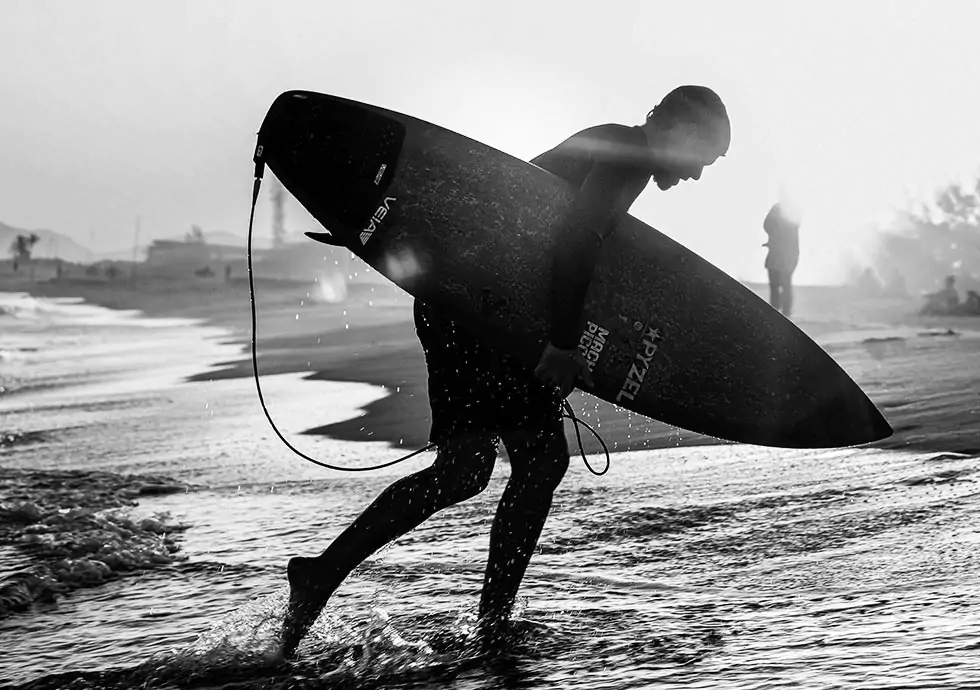
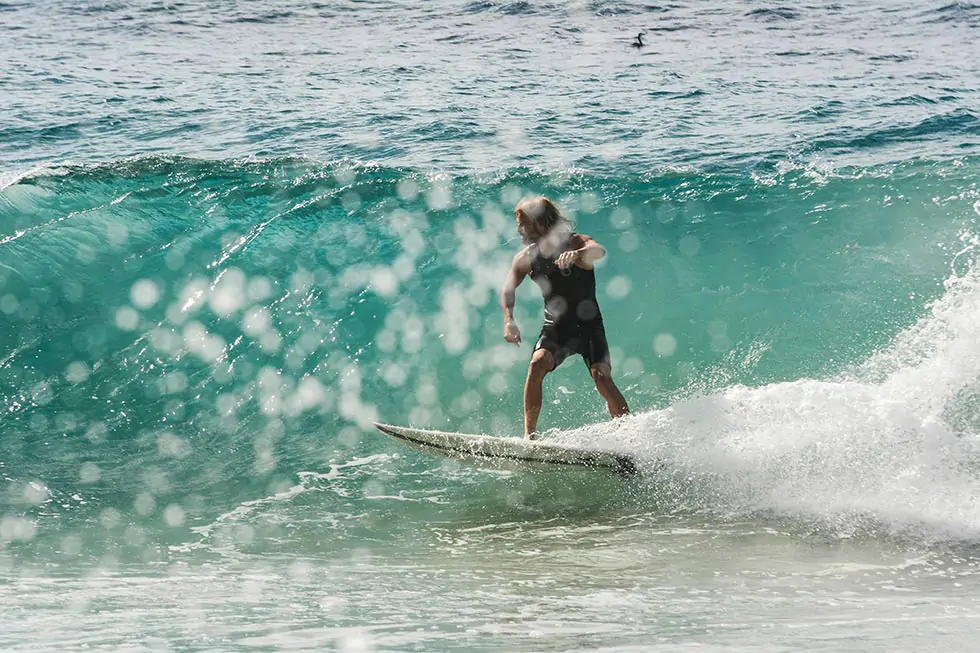
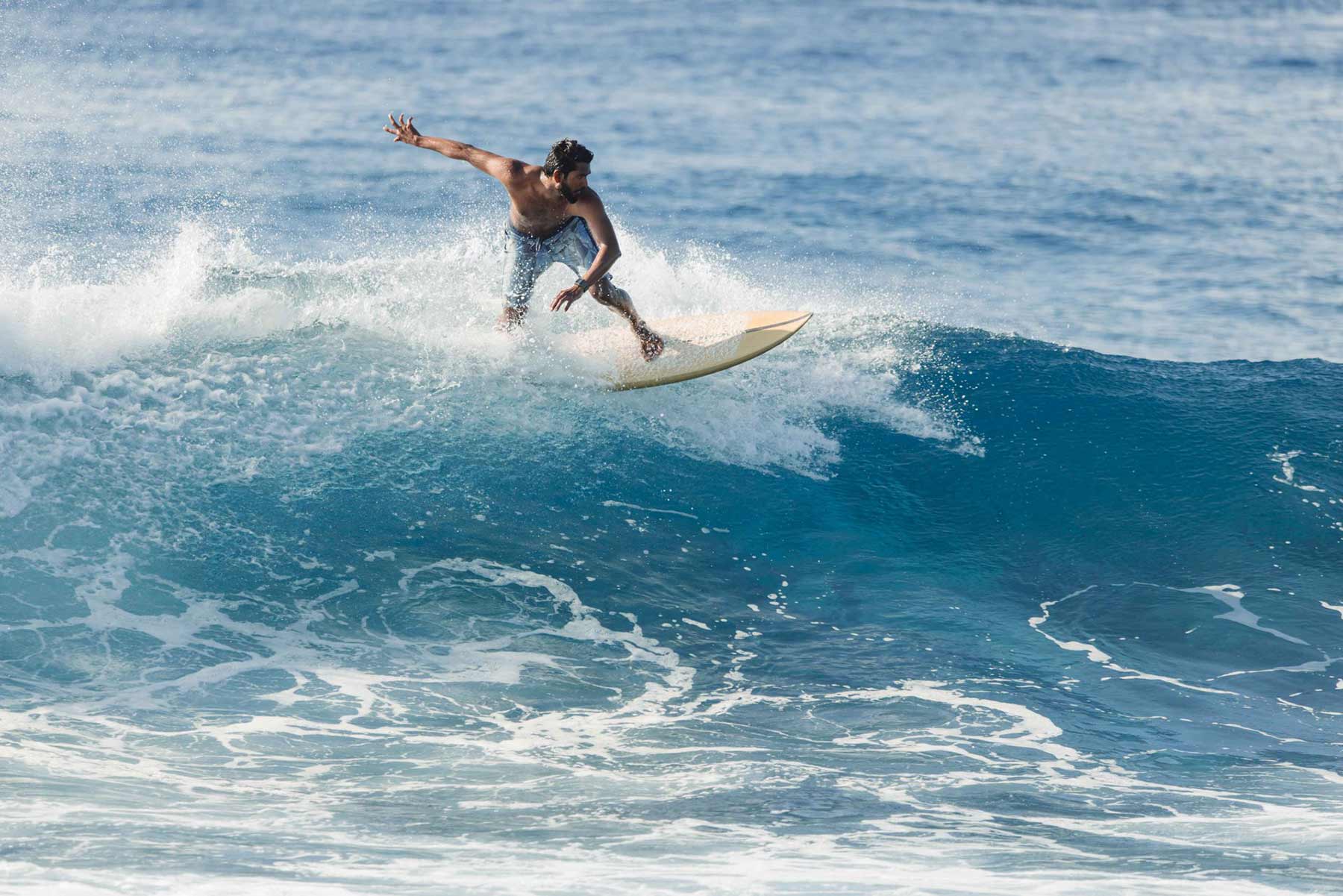
A surf holiday in the Dominican Republic means the north coast. That is where the Atlantic swell arrives, where the surf schools and surf camps are, and where a small town called Cabarete has built its whole week around the ocean. This guide covers when to come, where to surf, where to stay and how to choose a surf camp in the Dominican Republic that fits your level.
The short version
- Where: the north coast, between Puerto Plata and Río San Juan. Most surfing happens at Playa Encuentro, about ten minutes from Cabarete.
- When: beginners can learn all year. Intermediate surfers get their best run from March to November. The biggest waves come in winter.
- Base: Cabarete town, for the beach, the restaurants and the choice of things to do after the morning surf.
- Airport: Puerto Plata (POP), about 30 minutes away by road.
- Water: warm enough to surf in boardshorts or a swimsuit in every month of the year.
Why the north coast is the place for a Dominican Republic surf holiday
The north coast faces the open Atlantic, so it catches swell that the resort coasts in the east and south mostly miss. Add warm water, a short flight from North America and a town with a real surf culture, and you have one of the most reliable surf trips in the Caribbean.
Most visitors to the country never see this coast. They land in Punta Cana, stay inside a resort and fly home. The north is different. The coast road runs past cattle farms, small villages and long empty beaches, and the towns are places where people live, not compounds built for visitors.
For surfers, three things matter here.
- Consistency. The reefs at Playa Encuentro pick up swell from the north and the east, so flat days are rare.
- The daily wind pattern. Mornings are usually calm and glassy, and the trade wind arrives around midday. That gives you clean waves before lunch and, if you want it, a second sport in the afternoon.
- Range. One short stretch of coast holds gentle inside waves for a first lesson, shoulder-high peaks for improvers and heavy reef for experts.
That combination is why surfing in the Dominican Republic has grown around one town and one beach, and why a week here works for mixed groups where not everyone is at the same level.
When to go: the surf seasons on the north coast
There is no closed season. Beginners can learn in any month, because the inside section at Encuentro breaks small and soft all year. Intermediate surfers do best from March to November. Winter brings the largest north swells, which suit advanced and expert surfers.
| Level | Best months | What to expect |
|---|---|---|
| Beginner | All year | Small, soft waves on the inside; lessons in the calm of the early morning |
| Intermediate | March to November | Fun-sized waves, long glassy mornings and more room in the line-up |
| Advanced to expert | Winter | The biggest north swells of the year and powerful reef breaks |
| Kite and wing | May to September for strong wind | Steady afternoon trade winds; learning is possible all year |
Winter is when most people travel, so it is the busiest time in the water and in town. If you are learning, that matters less than you might think: lessons run on the inside, away from the main peaks. If you are an improver looking for space, the months outside the winter peak are the quiet favourite.
The Atlantic hurricane season runs from June to November. Direct hits on this coast are rare, and distant storms often send clean swell, but book flexible flights and travel insurance for those months.
Air and water temperatures barely change through the year. You will not need a wetsuit.
Where to surf: Playa Encuentro and the other north coast spots
Playa Encuentro is the centre of surfing in the Dominican Republic. It is a reef-fringed beach about ten minutes west of Cabarete with five named peaks, and it works for every level on the same morning. Other spots along the coast add variety when the swell or the wind changes.
The peaks at Encuentro, from west to east:
- Bobo's Point: soft, rolling waves at the western end. Good for first green waves and longboards.
- Coco Pipe: a fast, hollow right for experienced surfers on bigger days.
- The Right: the main peak and the busiest. A dependable right-hander that most improvers work up to.
- The Left: the left across the channel from The Right, often with fewer people on it.
- Destroyers: shallow, fast and at the far eastern end. Experts only.
Surf schools line the back of the beach, and beginner lessons take place on the inside, where broken waves roll in over deeper water. It is one of the few places where a first-timer and an expert can share a car to the beach and both come back happy.
Further afield, Playa Preciosa near Río San Juan is a powerful beach break for advanced surfers. Sosúa Bay only wakes up on the largest north swells. The outer reef off Cabarete itself is better known for wave-riding kiters and windsurfers than for surfers. Our guide to the north coast surf spots covers 16 breaks, each with a rating, a level and the drive time from Cabarete.
A note on the reef: enter by shuffling your feet, never dive, and consider reef booties if you are learning.
Where to stay: Cabarete town, Encuentro or an all-inclusive
Stay in Cabarete town. It puts you on a long sandy bay with restaurants, cafés and shops within walking distance, and the surf is a ten-minute ride away. Staying at Encuentro itself is quieter but isolated, and the all-inclusive resorts are far from both the waves and the life of the coast.
Cabarete town
The town curves around a wide bay. Beach restaurants put tables on the sand at night, there are good coffee places for the hours after the surf, and you can walk everywhere. If you travel with someone who does not surf, they have the beach, yoga, and the lagoon and caves of El Choco National Park right behind town. Read more in our guide to Cabarete town and our pick of Cabarete restaurants.
Playa Encuentro
Encuentro has a handful of lodges and rentals in the lanes behind the beach. You can walk to the waves, which is the appeal. The trade-off is everything else: few places to eat, a reef that makes swimming awkward, and a taxi or scooter needed for every dinner. For a week-long holiday, many people find it too quiet by the third evening.
All-inclusive resorts
The large all-inclusive hotels sit mostly around Puerto Plata and, on the far side of the island, Punta Cana. They are built so that you never need to leave, which is the opposite of what a surf trip needs. You pay for meals you will miss while you are at the beach, and you see very little of the Dominican Republic.
Our where to stay guide compares the options in more detail.
How to choose a surf camp in the Dominican Republic
A good surf camp in the Dominican Republic takes care of the parts that are hard to arrange alone: qualified coaching, the right board, transport to the beach at the right time and a group of people to share it with. Look closely at who the camp is built for, how it teaches and where it is.
- Who it is for. Some camps are bunk-room hostels for backpackers. Others are designed for adults who want a comfortable room and a good bed. Read the room descriptions and the guest reviews before the surf pages.
- Coaching, not just board hire. Ask how many students there are per instructor, whether the instructors are certified, and whether lessons include theory or video review.
- Location. A camp in Cabarete town gives you the beach and the restaurants on foot. A camp at Encuentro puts you beside the waves but away from everything else.
- What is included. Compare like with like: meals, airport transfers, lessons per week and use of boards outside lesson time.
- Group size and atmosphere. For solo travellers, the people around the table matter more than any facility.
A long-running example of the comfortable, coaching-led kind is Swell Surf Camp in Cabarete town. It was built from the ground up as a surf camp, opened in 2009, and is aimed at beginners and improvers, not experts.
Surf camp or independent trip?
Independent travellers can rent an apartment in town and book lessons directly with a surf school on the beach at Encuentro. That works well for confident travellers and for surfers who only need a board. First-timers and solo travellers tend to progress faster, and enjoy the week more, in a camp where the logistics are handled and the coaching builds from one day to the next.
What a day on a Dominican Republic surf holiday looks like
Surf early, rest at midday, play again in the afternoon. The wind sets the timetable: mornings are calm, afternoons are breezy, and the evenings belong to the beach restaurants in Cabarete.
- Early morning: coffee, a short ride to Encuentro, and into the water while it is still glassy.
- Late morning: back to town for a second breakfast as the wind starts to fill in.
- Afternoon: the pool, a siesta, yoga, or a kite or wing lesson on the bay.
- Evening: dinner with your feet in the sand.
Most people plan to surf every morning and are surprised by how tired they are by midweek. Leave gaps. A day off for the lagoon, the waterfalls at Damajagua or simply the beach makes the next session better.
Kitesurfing, wing foiling and the other sports
Cabarete is as well known for wind as for waves. Strong trade winds blow from May to September and lessons run all year, so many visitors surf in the morning and kite or wing in the afternoon.
Kite Beach, just west of the town centre, is where most of the kite schools are based. The bay in front of town is used for wing foiling and windsurfing. On days without wind there is stand-up paddling on the river at La Boca, mountain biking in the hills and canyoning inland. Our guide to kitesurfing and other sports in Cabarete has the detail.
Getting to the north coast
Fly to Puerto Plata (POP). The airport is about 30 minutes from Cabarete by taxi. Santiago (STI) is the second choice, at around an hour and a half. Avoid Punta Cana for a surf trip: it is at the opposite end of the island and most of a day away by road.
Santo Domingo (SDQ) has a wide choice of flights but is around four hours from Cabarete by road. If the price difference is small, Puerto Plata is worth paying for.
Once you are here you do not need a rental car. Taxis, motorbike taxis and camp shuttles cover the short hop between Cabarete and Encuentro. Before you fly, complete the free electronic entry form required by the Dominican authorities. Our getting here page covers airports, transfers and entry requirements.
What to pack for a surf trip
Pack light. Warm water and a casual town mean you need little more than swimwear, sun protection and something for the evening.
- A long-sleeved rash guard or surf shirt
- Reef-safe sunscreen and zinc for your face
- Boardshorts or a swimsuit that stays put in the waves
- Reef booties, if you are learning and want them
- A hat and sunglasses for the hours out of the water
- Travel insurance that covers watersports
Leave the surfboard at home unless you are attached to it. Camps and schools at Encuentro rent a full range of boards, and a beginner should be on a camp board anyway. US dollars are widely accepted alongside Dominican pesos, and there are cash machines in town.
Is a surf holiday in the Dominican Republic right for you?
It suits first-timers who want warm water and patient coaching. It suits improvers who want a lot of waves in a short trip, and couples or friends where not everyone surfs. It suits anyone who would sooner stay in a real town than a resort. Experts chasing heavy waves should aim for winter and watch the forecast.
Whatever your level, the formula is the same: base yourself in Cabarete, surf Encuentro early, and leave the afternoons open.